The Wetlands of International Importance, designated under the Convention on Wetlands, are critical sites for the conservation of global biodiversity. Also referred to as “Ramsar Sites”, they cover over 2.5 million square kilometres and provide essential services such as supplying areas with fresh water. Despite their global value, there’s currently a lack of consistent biodiversity reporting and basic site information for many Wetlands of International Importance. To assess whether biodiversity within these sites is being maintained or is in decline, access to reliable, long-term biodiversity data is required. However, there is limited availability of up-to-date, standardised, and georeferenced species data that can be used for biodiversity monitoring of the Ramsar sites.
Addressing the biodiversity data gaps for Ramsar Sites
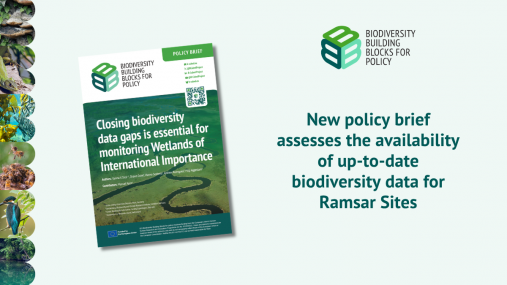
In its new policy brief, titled “Closing biodiversity data gaps is essential for monitoring Wetlands of International Importance”, B-Cubed aimed to determine whether data mediated by the Global Biodiversity Information Facility (GBIF) are sufficient for monitoring the status and trends of biodiversity across the global network of Wetlands of International Importance. To do so, the authors evaluated the availability of open biodiversity occurrence records hosted in GBIF and examined whether the species whose presence relates to the international importance of the site have any occurrences in this database.
Results and policy recommendations
Despite the increase in occurrences of Ramsar Information Sheet (RIS)-listed species in GBIF, 98% of Wetlands of International Importance still lack sufficient verifiable occurrences to calculate reliable biodiversity trends over time and space. Closing this biodiversity gap requires addressing upstream critical information deficit before open data tools like GBIF can be effective. Therefore, B-Cubed proposed four policy recommendations:
-
Contracting Parties should update the RIS using resources available in the Ramsar Sites Information Service;
-
Contracting Parties should submit the boundaries of the designated sites in a digital form to link open biodiversity data to the Wetlands of International Importance;
-
Interoperability and cooperation between GBIF and the Convention on Wetlands should be strengthened;
-
Data mobilisation efforts should be prioritised in regions where biodiversity data remain limited, particularly across the Global South.
Feeding species data from the Wetlands of International Importance into GBIF can make it more open and FAIR (Findable, Accessible, Interoperable, Reusable) where appropriate,
while safeguarding sensitive species data. This can benefit Parties directly by drawing on additional datasets on GBIF to evaluate the status and trends of sites more comprehensively.
Read the full policy brief here.